What Makes Up a Marble Team History
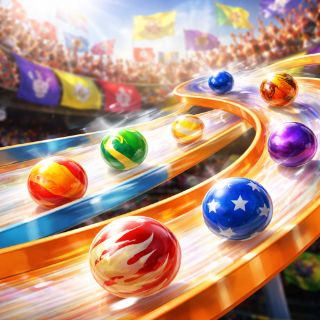
Every team in organized marble racing carries a profile built from several distinct layers. At the foundation are the basics: a name, a color scheme, and often a symbol or mascot. Teams like the Hazers or the Savage Speeders are immediately recognizable by their signature colors, which lets viewers track them across a chaotic field of competitors.
Fictional backstories add another dimension. Organizers, particularly those behind Jelle's Marble Runs, have crafted origin stories and personalities for teams, giving them traits that fans latch onto. Some teams are cast as underdogs, others as perennial favorites.
Rivalries develop naturally from repeated competition. When two teams consistently finish near each other, or when one knocks out another in a decisive event, those moments accumulate into narrative.
Fan communities then extend these identities further through artwork, commentary, and season archives. The result is a team profile shaped jointly by official organizers and the audience watching.
How Results and Memorable Events Shape Team Reputation
Podium finishes accumulate into something more than a tally. Over time, consistent top-three placements in events like the Marble League or Marbula One build a team's identity as a reliable contender. The Hazers, for instance, earned that reputation through steady qualifying performances and multiple podium appearances across consecutive seasons, even without a championship to their name.
Collapses matter just as much. A team that leads qualifying only to finish last in the final round gets labeled inconsistent, and that label sticks. Fans remember specific races, not just standings.
Underdog status emerges from dramatic reversals. A team finishing outside the top ten for three seasons, then placing second in a major event, generates the kind of narrative that commentators return to repeatedly.
Championships define legacy, but single standout performances can reframe an entire team history. One remarkable qualifying run in 2019 or an unexpected sprint victory can shift how a team is discussed for years afterward.
Why Team Histories Matter to Fans and Community Archives
Shared memory is what separates a sport from a spectacle. Fan forums, dedicated wikis, and season summary threads have become the informal archives of marble racing, preserving standings, rivalry outcomes, and individual team trajectories that would otherwise disappear after each event.
These resources give newcomers something tangible to work with. A fan joining after Marbula One Season 3 can trace the Hazers' qualifying record or compare the Oceanics' podium finishes across multiple seasons without having to watch every race from scratch.
Archived rankings also fuel debate in ways that keep communities active between events. Comparing eras, questioning whether a dominant team from an earlier season would perform differently under current tournament formats, and revisiting close finishes all depend on reliable historical records.
There's no denying that this collective record-keeping elevates how the sport is experienced. Team histories become reference points, not just memories, giving marble racing a continuity that casual viewers rarely expect to find.
Team Histories Give Marble Racing Lasting Meaning
Records, rivalries, fictional backstories, and community archives do not exist in isolation – they combine to make individual races part of something larger. When a team like the Hazers carries a three-season losing streak into a championship final, or when the Thunderbolts' signature red-and-gold colours appear at the top of a standings table after years of mid-table finishes, those moments carry weight because a history exists behind them. Fan-built archives preserve that weight, turning scattered results into a continuous record that new viewers can trace and longtime followers can debate. Identity, narrative, and performance data work together to make marble racing legible and emotionally engaging in a way that a single isolated event never could.